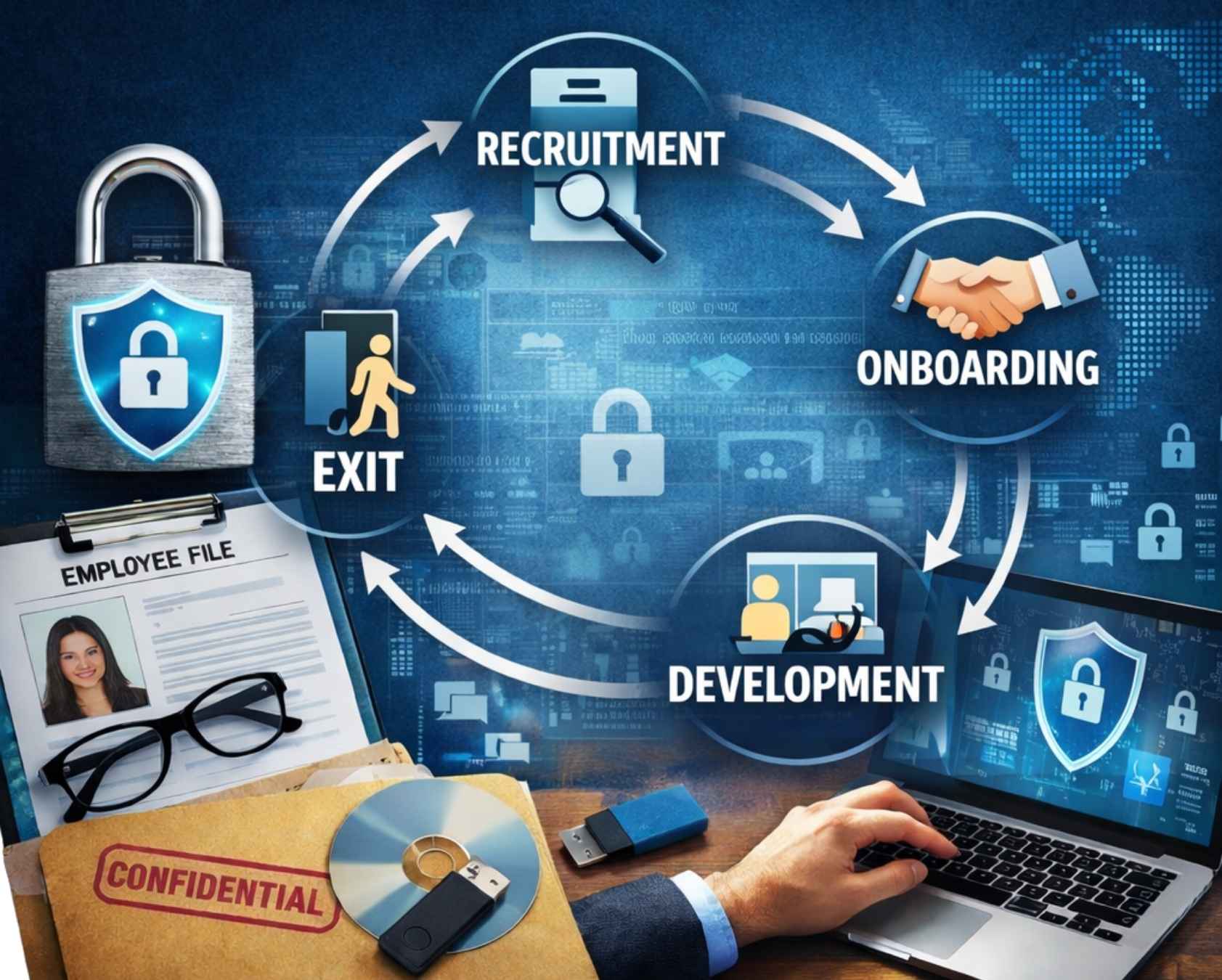
Modern businesses need smarter ways to manage employee leave requests without delays or errors. The best leave management software supports workforce management, aligns with attendance management, and simplifies time off requests in just a few clicks. Accurate attendance tracking ensures every request reflects real leave dates and available paid time, reducing compliance risk and payroll inconsistencies.
Strong systems also connect leave data with performance management, helping teams maintain productivity while balancing time off. With built-in automation and ongoing support, HR teams reduce manual effort and gain better visibility across operations. Choosing the right solution helps organizations streamline processes, improve accuracy, and maintain control over employee absences without increasing complexity.
What Is Leave Management Software?
Leave management software is a system that centralizes every type of employee time off in one place. Instead of scattered email requests, shared calendars that nobody updates, and spreadsheets that break when someone adds a formula wrong, you get structured workflows with clear approvals and automatic notifications.
These management systems handle annual leave, sick leave, unpaid leave, jury duty, bereavement, parental leave, and region-specific public holidays. For US companies, that often includes FMLA tracking. For global teams, it means automatic sync with local holiday calendars so nobody books a vacation on a day the office is already closed.
Most tools offer employee self service, where staff submit leave requests through a portal or mobile app. Managers approve requests with context on team coverage. HR gets comprehensive reporting that feeds into payroll and scheduling tools. The entire process becomes faster, cleaner, and easier to audit when questions come up later.
Types Of Leave Management Software
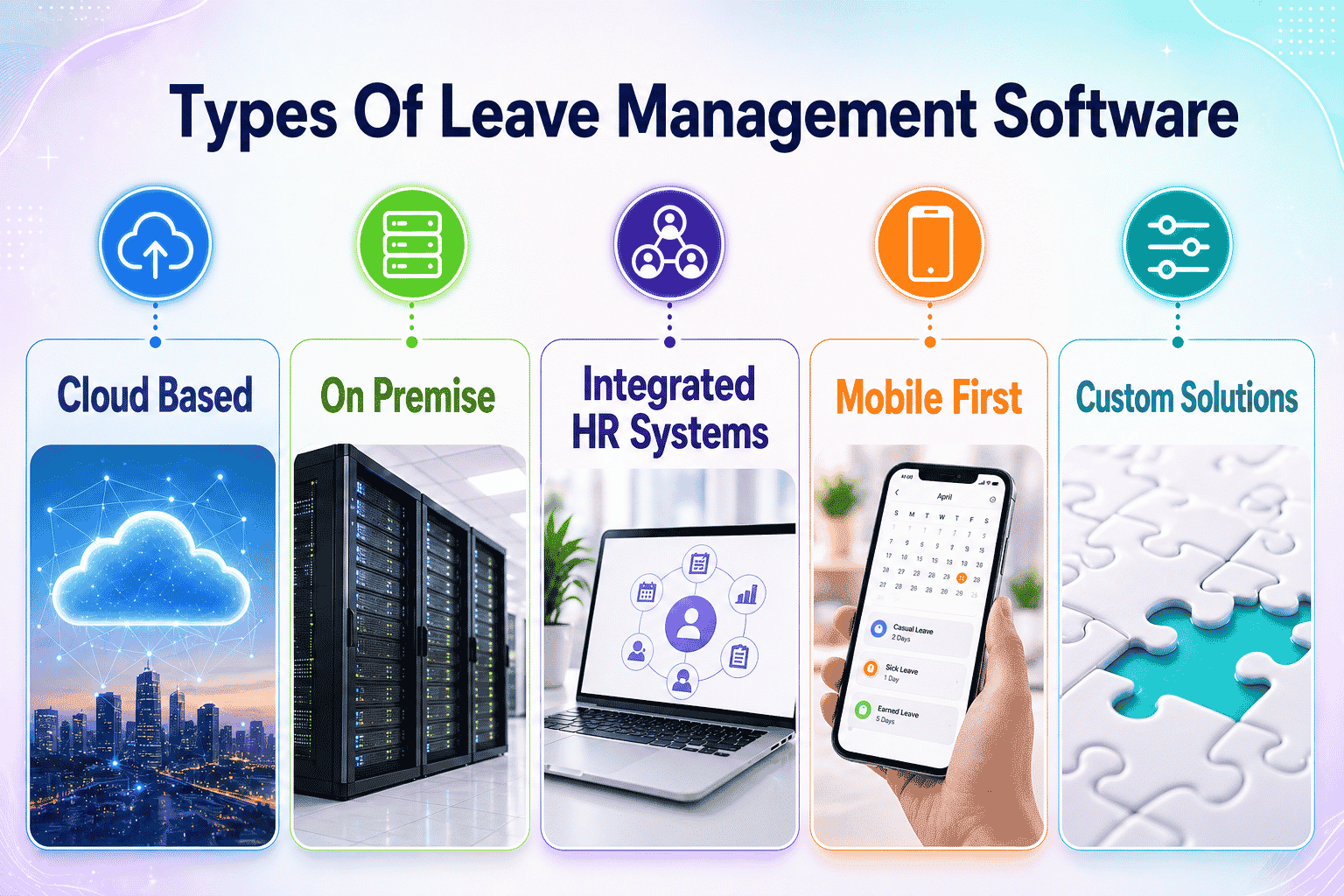
Different types of leave management software address varied business needs. Choosing the right system depends on company size, workflows, and how teams handle employee absences, policies, and overall workforce coordination.
Cloud Based Leave Management Software
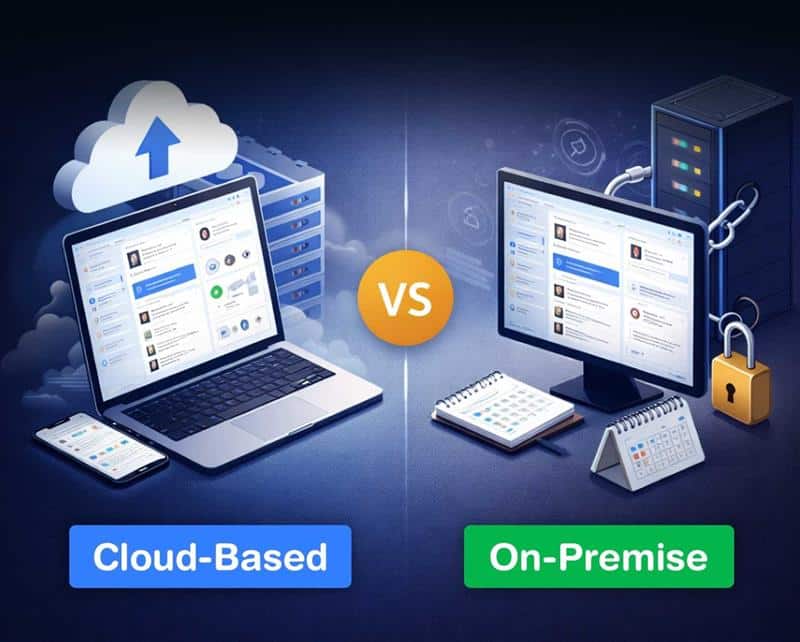
Cloud-based systems offer flexibility and scalability for modern teams. Access from anywhere supports remote and hybrid work environments while enabling real-time leave tracking. HR teams benefit from automatic updates, secure data storage, and seamless integration with other HR systems. Organizations can manage employee leave requests without infrastructure costs, making cloud solutions a preferred choice for growing businesses.
On Premise Leave Management Software
On-premise solutions provide full control over data and system customization. Companies with strict compliance requirements or internal IT capabilities often choose this model. While setup and maintenance demand more resources, businesses gain direct oversight of security, configurations, and internal processes. This type suits organizations prioritizing data governance and tailored system environments.
Integrated HR Management Systems
Integrated systems combine leave tracking with payroll, attendance, and broader human resources management. A unified platform simplifies HR processes and reduces manual data entry across functions. Teams can manage employee absences alongside payroll processing and benefits administration, improving accuracy and operational efficiency. This approach works well for businesses seeking end-to-end workforce management.
Mobile First Leave Management Software
Mobile-first platforms focus on accessibility and ease of use. Employees can submit leave requests, check leave balances, and track approvals through mobile apps. HR teams benefit from faster response times and improved employee engagement. This type is ideal for field teams or organizations with distributed workforces that rely on real-time communication and quick updates.
Custom Leave Management Solutions
Custom solutions allow businesses to design workflows that match specific policies and operational needs. From unique approval processes to specialized reporting, customization supports complex requirements. Although development may take more time, companies gain a system aligned with internal structures. This option fits organizations with unique leave policies or advanced workflow demands.
5 Best Leave Management Software For 2026
This section ranks the 5 leading leave management tools for small to mid-sized businesses. The evaluation focuses on usability, automation, integrations, and pricing transparency, mirroring the criteria used in broader roundups of the best leave management software. These are not generic HR suites. Each platform has strong, clearly documented leave management software to track, approve & manage time off capabilities.
1. BambooHR
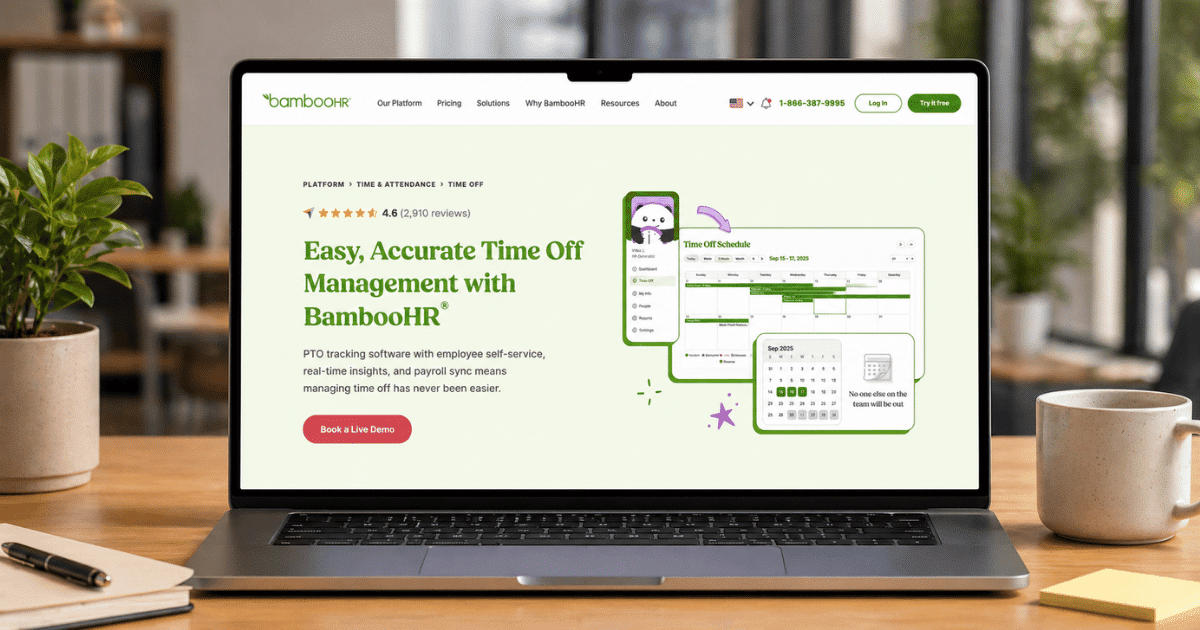
Widely adopted across growing businesses, this platform delivers structured leave management features that simplify policy control and visibility. Strong compliance alignment with the medical leave act and built-in automation help teams handle approved leave requests efficiently while improving workforce planning and spend management decisions.
Leave Management Capabilities:
- Advanced leave management features for policy customization
- Automated tracking aligned with medical leave act compliance
- Real-time visibility into approved leave requests
- Integrated spend management insights for workforce costs
- Mobile accessibility for anytime leave tracking
- Tools designed to improve operational efficiency across teams
Ease Of Use:
Clean interface and intuitive workflows reduce training time for HR teams. Mobile accessibility ensures employees and managers can manage leave actions quickly, improving operational efficiency across distributed teams.
Best For:
Ideal for small to mid-sized businesses seeking structured leave management features with compliance support, better spend management visibility, and tools that improve operational efficiency without adding complexity.
2. Payrun
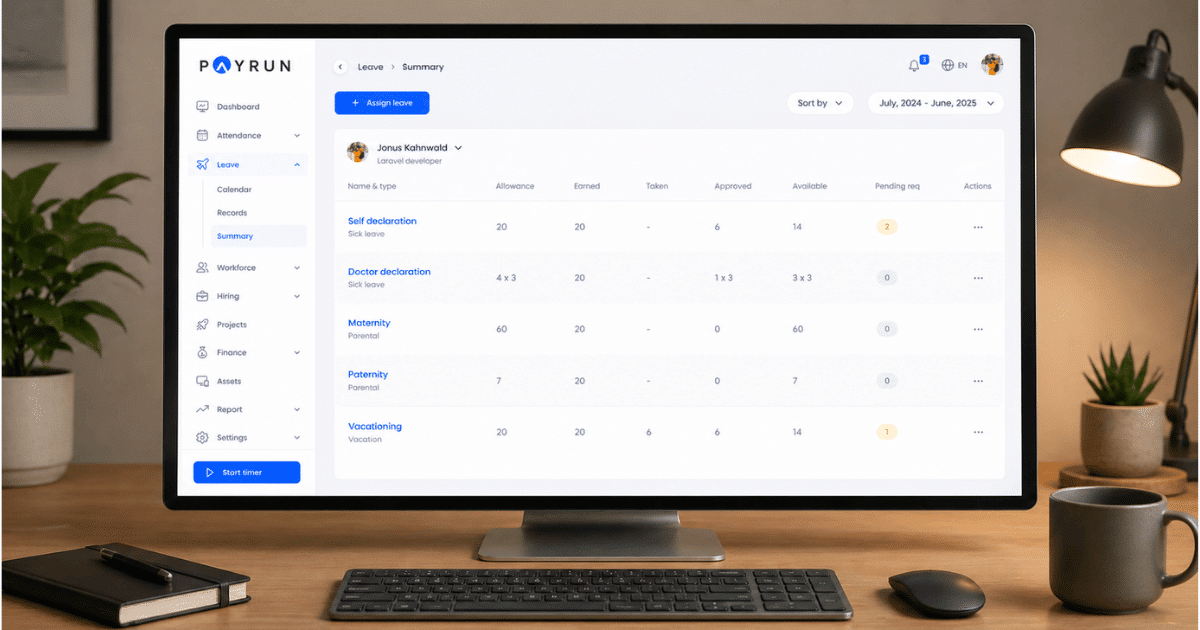
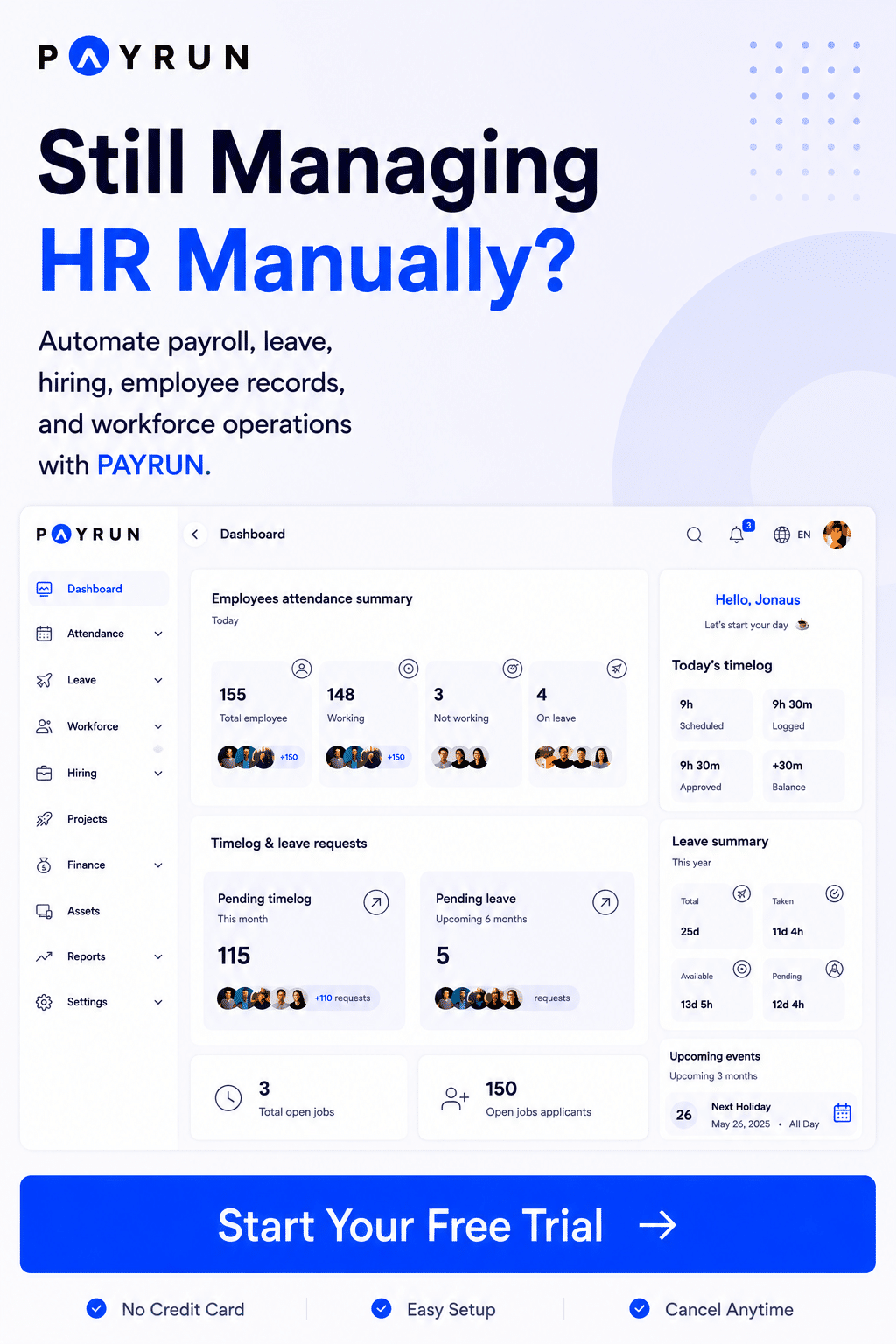
Designed for businesses that need precision between leave data and salary outcomes, Payrun connects absence tracking with payroll systems in a single workflow. Its simplified leave management system for HR teams gives clear visibility into employee schedules and real-time leave balances, ensuring decisions stay accurate, consistent, and aligned with operational needs.
Leave Management Capabilities:
- Configurable leave policies aligned with employee schedules
- Centralized request management for faster approvals
- Real-time leave balances synced with payroll systems
- Smart alerts to ensure adequate coverage across teams
- Automated workflows that reduce repetitive administrative tasks
- Self-service tools allowing employees to submit and track leave
Ease Of Use:
Clean navigation and structured workflows simplify request management across teams. Automation reduces administrative tasks, while real-time updates across payroll systems and employee schedules improve accuracy without adding complexity.
Best For:
Small and mid-sized businesses needing strong alignment between leave balances and payroll systems, especially teams allowing employees to manage requests independently while ensuring adequate coverage and minimal administrative tasks.
3. Connecteam
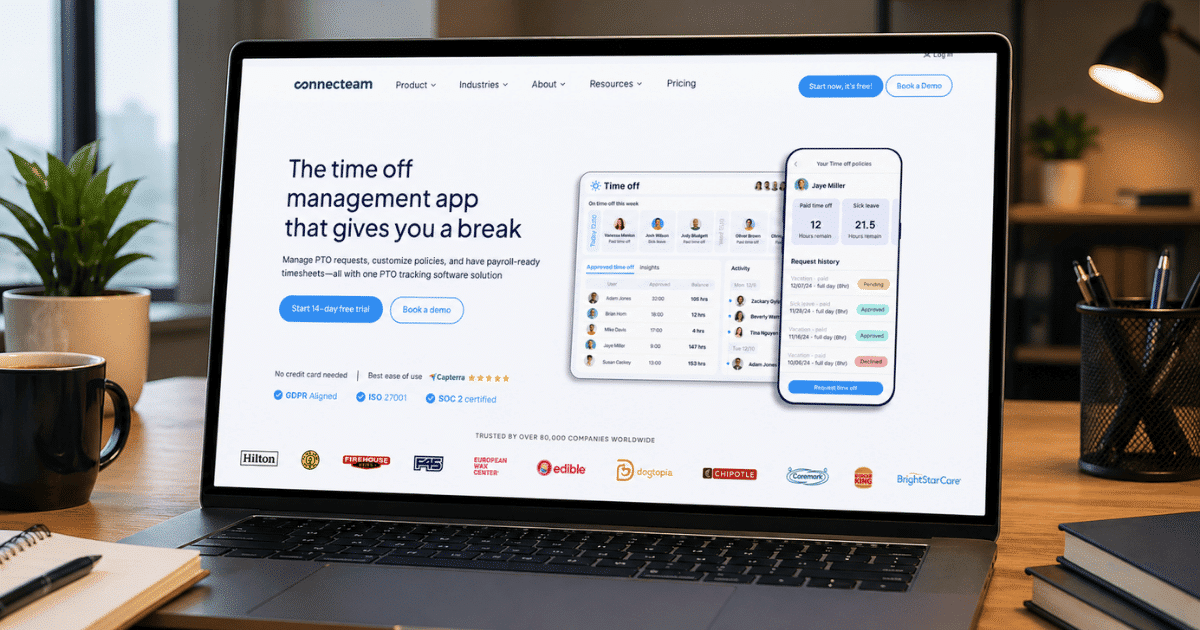
Built for deskless and distributed teams, Connecteam brings workforce coordination into a centralized platform that simplifies HR tasks and daily operations. Strong workflow control and mobile-first access support structured leave approval workflows to manage employee leave faster and smarter, helping hr managers maintain compliance with labor regulations while reducing administrative burden across teams.
Leave Management Capabilities:
- Centralized platform to manage leave, schedules, and hr operations in one place
- Custom approval workflows that align with company policies
- Tools designed for reducing administrative overhead in daily hr tasks
- Mobile-first system that supports field teams and hr managers
- Integration options with other hr systems for connected workflows
- Features that support employee onboarding and workforce coordination
Ease Of Use:
Mobile-first design makes navigation simple for both managers and employees. Approval workflows stay clear and structured, helping hr functions run smoothly while improving operational efficiency across distributed teams.
Best For:
Organizations seeking a centralized platform to manage hr operations, streamline hr tasks, and reduce administrative burden while maintaining compliance with labor regulations and integrating with other hr systems.
4. Replicon
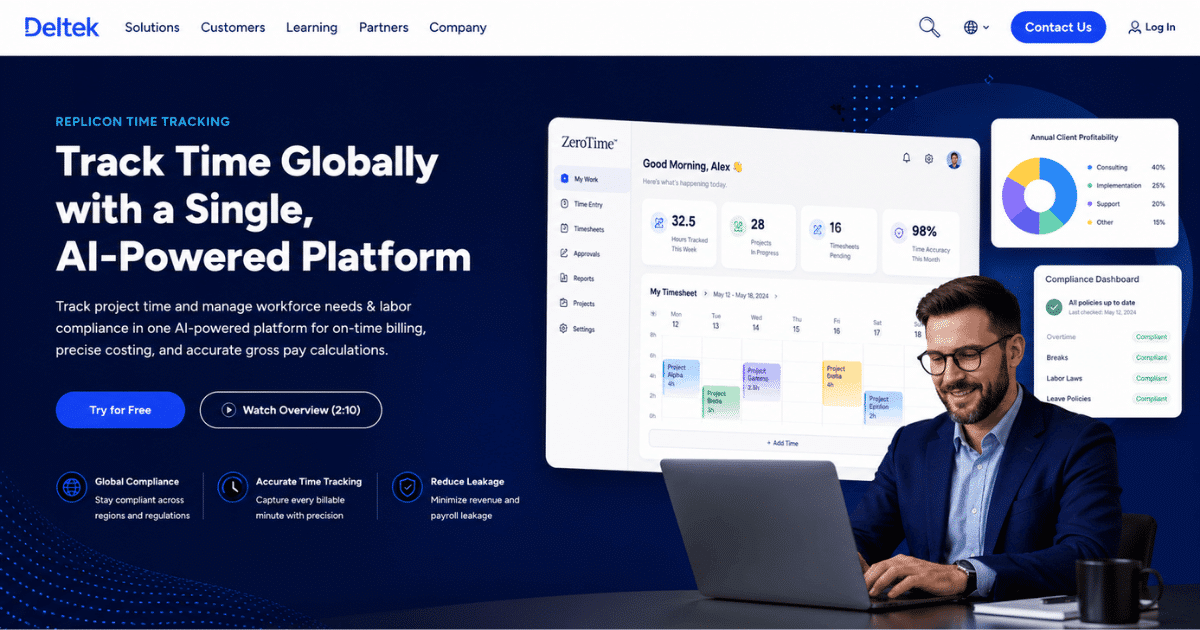
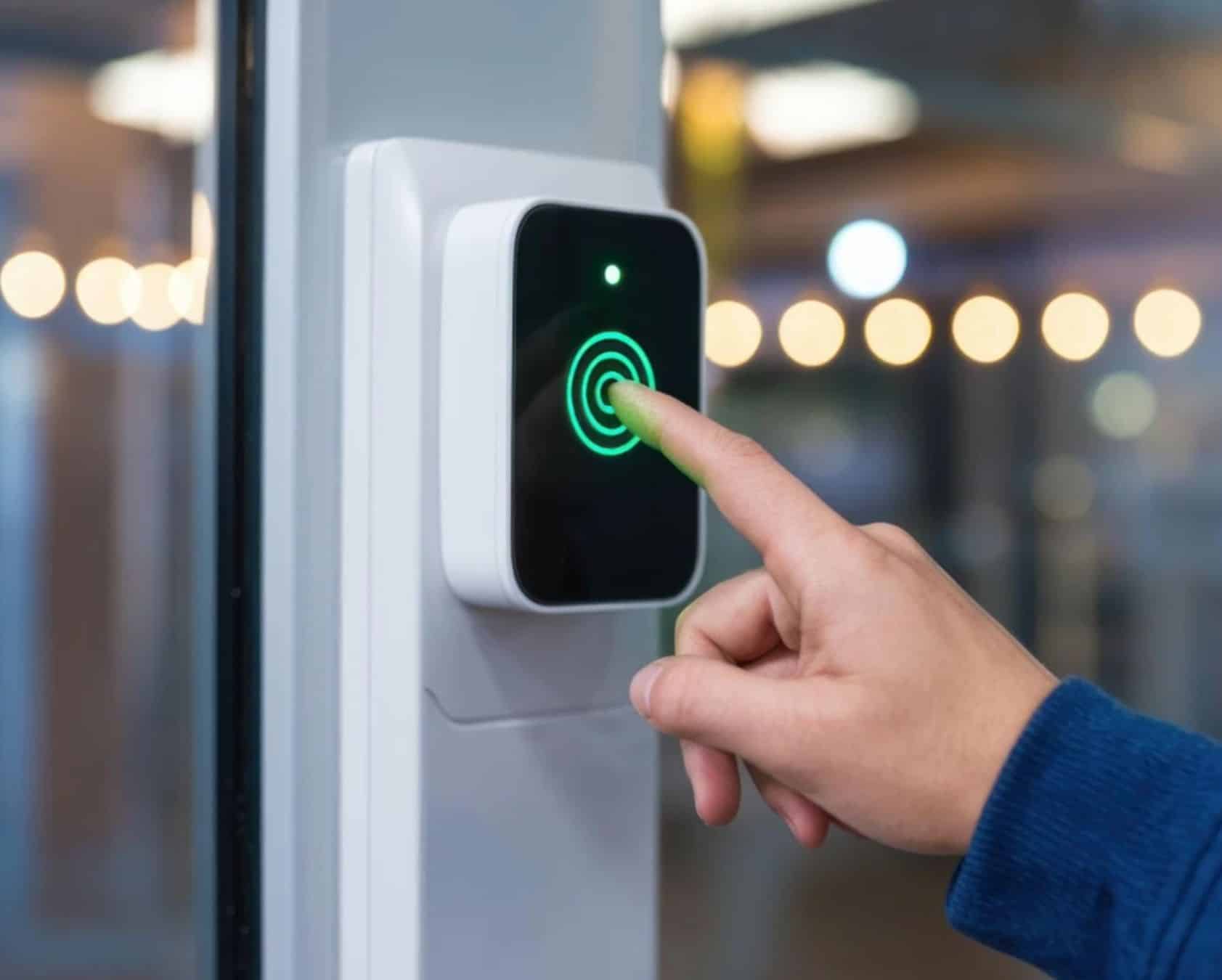
Designed for organizations that require precision and compliance, Replicon combines time tracking with leave oversight to support accurate payroll processing and regulatory alignment, similar to modern attendance tracking software with real-time timeline view. Advanced reporting capabilities help hr managers maintain control over labor regulations while improving visibility across hr functions.
Leave Management Capabilities:
- Advanced tracking aligned with payroll processing requirements
- Compliance-focused tools supporting labor regulations
- Configurable approval workflows for structured leave handling
- Integration with other hr systems for unified data management
- Analytics that improve operational efficiency and decision-making
- Features supporting hr managers across complex hr operations
Ease Of Use:
Structured dashboards provide clarity for hr managers handling complex hr tasks. Automation reduces administrative burden while ensuring payroll processing and compliance workflows remain accurate and consistent.
Best For:
Organizations seeking strong compliance, accurate payroll processing, and deep reporting. Ideal for businesses managing complex hr operations with strict labor regulations and multiple system integrations.
5. actiPLANS
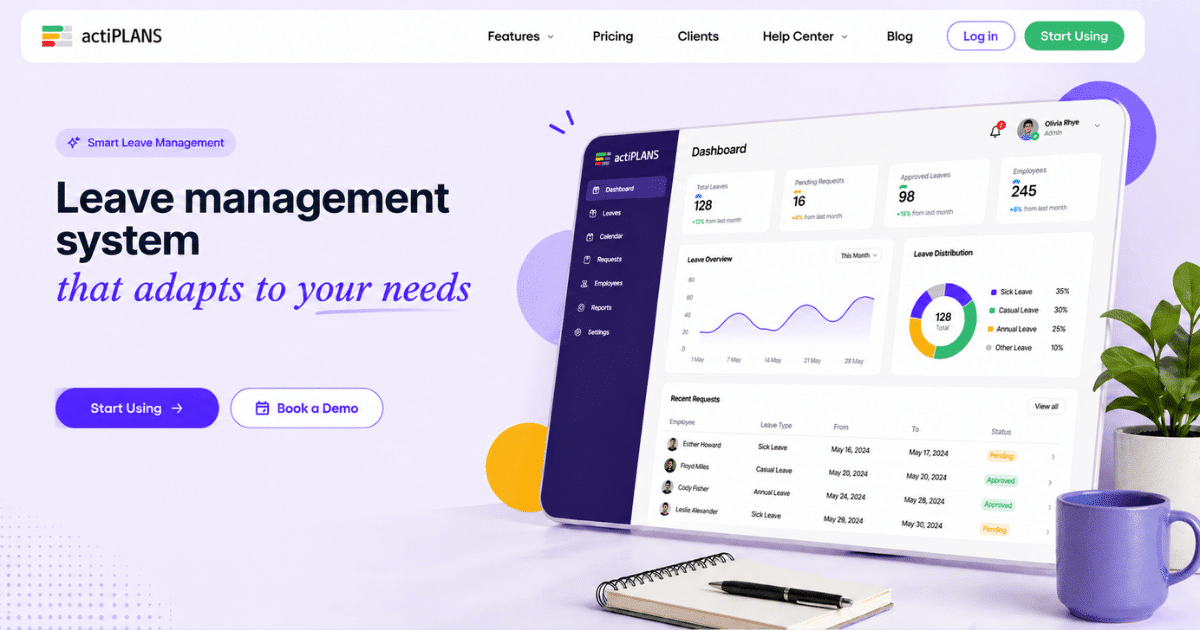
Focused on simplicity and visual planning, actiPLANS delivers flexible leave tracking within a lightweight system that supports broader workforce coordination. Clear scheduling views, supported by concepts similar to holiday management software to streamline holiday tracking, and adaptable policies help hr managers manage leave without increasing administrative burden.
Leave Management Capabilities:
- Visual planning tools for tracking leave and availability
- Flexible approval workflows aligned with company policies
- Centralized platform to manage leave across teams
- Tools reducing administrative overhead in daily hr tasks
- Integration support with other hr systems
- Features supporting employee onboarding and leave setup
Ease Of Use:
Visual interface simplifies hr tasks with clear leave timelines and schedules. Reduced administrative burden and intuitive workflows help teams improve operational efficiency without heavy configuration.
Best For:
Organizations seeking straightforward leave tracking with visual planning tools. Suitable for teams that want flexible workflows, support for employee onboarding, and better operational efficiency without complex systems.
Core Features To Look For In Leave Management Software
Regardless of which vendor you choose, certain core capabilities make or break a leave system’s usefulness for HR and managers. Modern employee leave tracking systems for simple, accurate management depend on policy flexibility, automation, employee experience, analytics, and integrations.
Create a simple checklist from these features before booking demos or trials. This helps ensure you are comparing apples to apples across software solutions like Payrun and others.
Leave Policy Customization
Modern workforces mix full-time, part-time, and contract staff, often across different regions with unique legal entitlements. Your tracking software should support this complexity without requiring developer help.
What to look for:
- Multiple leave types (annual leave, sick leave, unpaid, TOIL, volunteer days)
- Accrual rules (annual, monthly, per-hour worked)
- Probation period rules and carryover caps
- Regional holiday calendars
- Custom categories like study leave or bereavement
A good tool lets HR define leave policies once and apply them consistently across teams. Payrun and similar advanced platforms handle this centrally, keeping everything up to date without manual data entry.
Automations And Workflows
Automation reduces manual busywork and helps you save time on repetitive tasks. HR automation for modern businesses and structured HR workflow automation ensure request management routes to the right approver automatically, sends reminders, and applies policy rules without human intervention.
Examples of useful automation:
- Auto-approval for short absences meeting certain conditions
- Automatic rejection if a request breaks policy limits
- Real-time balance updates after approval
- Automatic logging for audit purposes
- Triggers that update payroll and scheduling systems
When an employee submits a leave request, the approval process should flow smoothly from manager review to balance update to payroll sync. No re-keying, no spreadsheet exports.
Employee And Manager Experience
Adoption depends on how easy the tool is for employees to request time off and for managers to see the impact on staffing. A user friendly interface is not optional.
Key UX elements:
- Self service portals and mobile app access
- Clear notifications and status updates
- Calendar view of upcoming employee absences
- One-click approve requests functionality
- Context on team coverage and overlap
Remote and hybrid teams especially benefit from transparent visibility into who is off and when. Compare this to the old way of emailing HR and waiting days for a response. The time savings and reduced confusion are a game changer.
Analytics, Reporting, And Compliance
Reporting helps HR identify patterns and respond proactively. An instant overview of absence trends reveals issues like high sick leave in certain teams or seasonal spikes that affect staffing.
Reporting capabilities to prioritize:
- Exportable reports with filters by department and location
- Trend charts over months or years
- FMLA tracking for US companies
- Documented approval histories
- Audit trails for compliance
These features help you stay compliant with local labor laws and ensure compliance during internal or external audits. When disputes arise, having timestamped records of every action makes resolution straightforward.
Integrations With HR, Payroll, And Scheduling
Tight integration with HRIS, payroll platforms, and scheduling tools prevents duplicate data entry and mismatched records. Robust automated payroll software features and benefits and a clear understanding of what payroll processing is for growing businesses show why this is where many businesses see the biggest return on investment.
Integration types to evaluate:
- Syncing employee profiles from HR systems
- Pushing approved leave into payroll calculations
- Updating schedules when time off is granted
- Google Calendar sync for team visibility
- API access for custom workflows
Payrun’s core value lies in having leave directly tie into payroll calculations. This avoids errors where unpaid leave is not reflected in salaries. Ask vendors detailed questions about available integrations and data refresh frequency.
How To Choose The Best Leave Management Software For Your Business
The best leave management system depends on your team size, industry, legal environment, and whether payroll sits in-house or with a provider. There is no universal answer, but a structured approach helps.
Selection steps:
| Step | Action |
|---|---|
| 1. Map requirements | List must-have vs nice-to-have features based on your leave policies |
| 2. Shortlist tools | Narrow to 3-4 options that fit your budget and size |
| 3. Run trials | Test with real users from HR, management, and front-line staff |
| 4. Involve finance | Get payroll or finance team input on integration needs |
| 5. Check support | Evaluate implementation support and ongoing customer service |
Map Employee Leave Requests And Policies
Start with a clear structure for employee leave requests aligned with company policies and compliance needs. Define leave types, accrual rules, and approval criteria to support effective leave request management. Strong mapping helps human resources management maintain consistency across teams while reducing confusion. A well-documented system improves visibility into managing employee absences and ensures every request follows a standardized process. Clear policy alignment also supports better employee engagement, as employees understand expectations and entitlements without friction.
Shortlist Tools Based On Key Features
Evaluate solutions by focusing on key features that directly support your operations. The right HR leave management system should handle employee leave requests, provide reporting insights, and integrate with payroll or benefits administration systems. Prioritize tools that help streamline hr processes and reduce manual coordination. A strong platform should also support human resources management across multiple teams while scaling with business growth. Shortlisting based on functionality ensures the system supports both operational control and employee experience.
Run Trials Across The Entire Employee Lifecycle
Test shortlisted tools in real scenarios across the entire employee lifecycle, from onboarding to long-term workforce planning. Guidance on implementing an attendance management system in your business can inform these trial phases, which should include HR teams, managers, and employees to evaluate usability and performance. Focus on how the system supports managing employee absences and improves employee engagement through transparency. Effective leave management software automates repetitive tasks, allowing HR to focus on strategic priorities. Real-world testing ensures the platform meets expectations before full implementation.
Involve Finance And Benefits Administration Early
Collaboration with finance ensures alignment between leave policies and cost control. Understanding the trade-offs in HR software vs spreadsheets for payroll underscores why systems should integrate with payroll and benefits administration to maintain accurate records and avoid discrepancies. Including finance teams early helps validate how leave management software automates calculations, accruals, and reporting. This alignment strengthens human resources management and ensures compliance across departments. A connected approach also improves forecasting and reduces errors tied to manual processes.
Check Employee Self Service Portal And Automation
Evaluate the employee self service portal for ease of use and accessibility. A strong portal allows employees to submit and track employee leave requests without HR intervention, aligning with the mission of a trustworthy HR management partner like Payrun. Tools that support automation improve leave request management and reduce administrative workload. Features that enable employees to manage schedules contribute to better planning and improved employee engagement. When absence management software includes intuitive self-service options, organizations can streamline hr processes while delivering a better employee experience.
How Payrun Helps Businesses Manage Leave And Payroll Together
Managing employee leave well is only half the challenge. The other half is making sure approved time off actually shows up correctly in paychecks. This is where Payrun’s all-in-one HR platform, with its innovative HR features, delivers practical value for growing businesses.
Policy Configuration Made Simple
Payrun lets HR define leave policies including annual leave, sick leave, maternity, paternity, and unpaid time off with granular accrual rules. You can set carryover caps, probation period exceptions, and tenure-based vesting. Regional holiday calendars sync automatically, so empower employees to request time without confusion about what counts as a working day.
Employee Experience
Staff use a clean self service portal or mobile app to request time off and track time balances. Status updates are visible in real time, eliminating the back-and-forth emails that slow down the leave process. Managers see team calendars with overlap detection, making it easy to approve requests with confidence.
Payroll Accuracy
Here is where Payrun becomes a game changer. Approved leave automatically flows into payroll calculations. Deductions, allowances, and statutory payments are calculated correctly without manual re-entry. This eliminates the errors that plague 30% of manual systems, according to HR benchmarks.
Business Benefits:
- Fewer manual pay corrections each cycle
- Clearer visibility into who is off during payroll cut-off
- Cleaner records for audits and compliance
- HR focus shifts from spreadsheets to strategy
For businesses ready to eliminate the gap between leave approvals and accurate salary processing, Payrun offers a reliable path forward. It stands out as the best HR software for small businesses looking to simplify HR by replacing disconnected tools with HR and payroll software built for SaaS and software teams. Explore pricing and demo options at test.payrun.app to see how it fits your hr processes and team structure.
FAQ
Why Do Businesses Need Leave Management Software
Businesses need leave management software because manual methods fail as teams grow. Spreadsheets and email threads create tracking errors, missed approvals, and payroll mistakes. Studies show poor leave tracking costs companies 5-10% in productivity losses annually, with 70% of HR professionals citing manual errors as their top pain point. Dedicated software provides real time visibility, enforces policies automatically, and maintains audit trails that protect the business during disputes or compliance reviews. For any team above 20 people, the time saved and errors avoided typically justify the investment within months.
How Does Leave Management Software Work
Leave management software centralizes all absence requests in one system. Employees submit leave requests through a web portal or mobile app, selecting leave dates and type. The system routes requests to the appropriate manager based on configured workflows. Managers approve requests with visibility into team coverage and potential conflicts. Once approved, balances update automatically and the data syncs with payroll and scheduling tools. Every action is logged with timestamps, creating a complete audit trail. The entire process replaces scattered emails and shared calendars with structured, trackable workflows.
Who Should Use Leave Management Software
Any organization with more than 15-20 employees benefits from dedicated leave tracking. Small businesses gain time savings and error reduction. Medium sized businesses with multiple locations or leave policies need centralized management. Large organizations require compliance features and advanced reporting. Specific industries like retail, healthcare, and professional services see particular value because shift coverage and capacity planning directly affect operations. HR teams, managers, and payroll administrators are the primary users, while employees interact through self-service request features.
What Features Matter In Leave Management Software
The most important features include policy customization for different leave types and employee groups, automated approval workflows, employee self service access, mobile devices support, and payroll integration. Beyond basics, look for team calendar views, overlap detection, accrual tracking, carryover rules, and comprehensive reporting. Compliance features like FMLA tracking and audit trails matter for regulated industries. Integration capabilities with your existing hr data systems, payroll providers, and scheduling tools determine how smoothly the software fits your operations.
How Does Leave Management Software Improve HR Efficiency
These systems eliminate manual work across the leave process. Instead of chasing approvals via email, managers click once. Instead of updating spreadsheets, balances adjust automatically. Instead of exporting data for payroll, information syncs directly. HR teams report 25-50% reduction in admin hours after implementation. The software also reduces errors that create downstream work, like correcting overpayments or resolving disputes about remaining balances. This frees hr teams to focus on strategic work like employee engagement and workforce planning rather than data entry.
When Should A Company Switch From Manual Leave Tracking
The right time to switch is before manual tracking causes serious problems. Warning signs include frequent payroll corrections due to leave errors, confusion about who approved what, overlapping vacations causing coverage gaps, and complaints about slow approval response times. If tracking employee time requires more than a few hours per week or if errors happen monthly, manual processes have outgrown their usefulness. Companies planning to hire aggressively or expand to new locations should implement software proactively to support growth.
How Does Leave Management Software Handle Compliance
Modern software handles compliance through several mechanisms. It enforces configured policy rules automatically, preventing requests that violate limits or eligibility requirements. It maintains timestamped audit trails documenting every request, approval, and change. For US companies, it tracks FMLA entitlements and usage. For global teams, it syncs regional holiday calendars and supports location-based policies. Reports provide documentation for internal audits or labor law reviews. This systematic approach to paid time tracking and policy enforcement reduces legal risk compared to manual methods where documentation is often incomplete.